

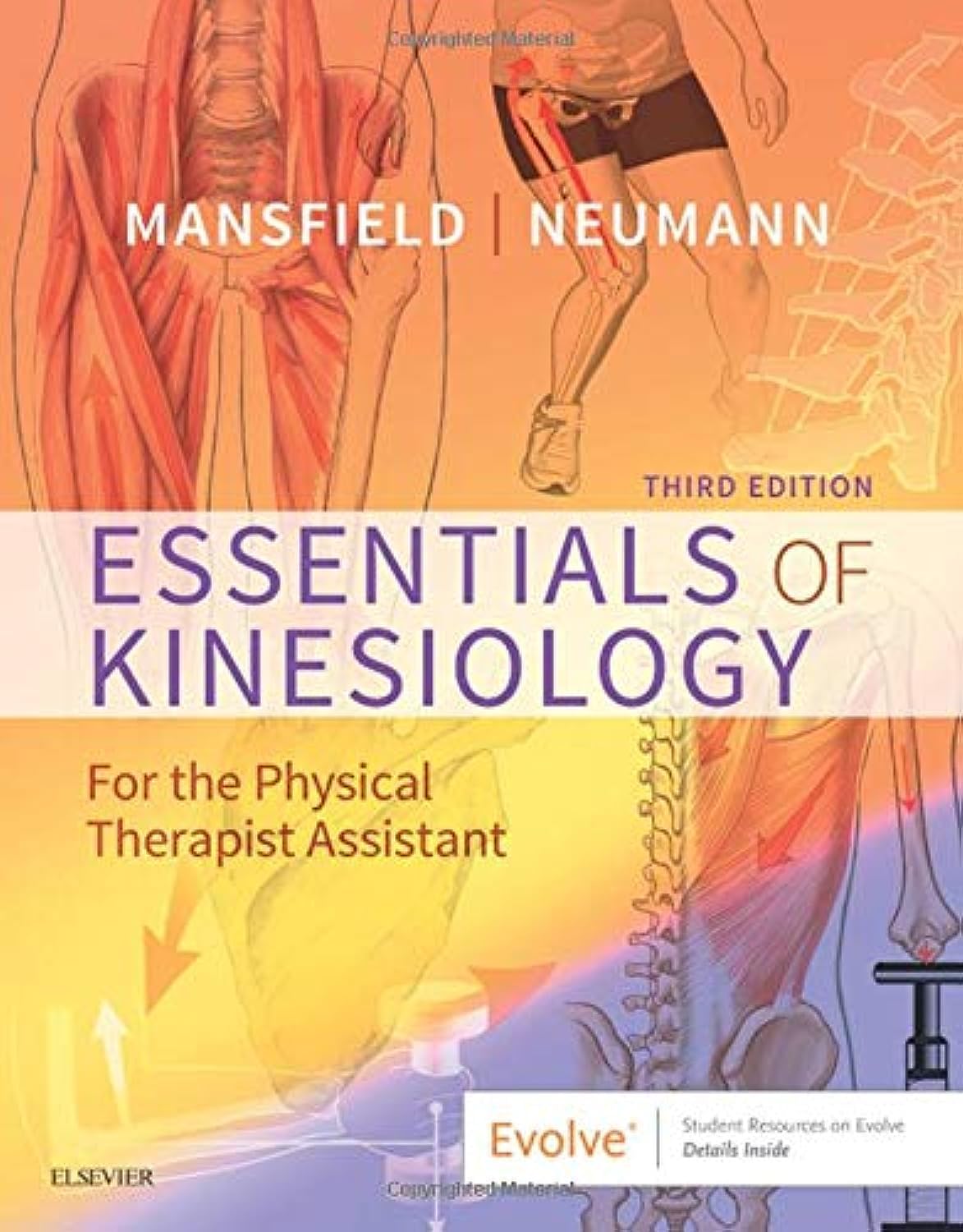
Essentials of Kinesiology for the Physical Therapist Assistant 3rd edition by Mansfield Test Bank
Original price was: $60.00.$30.00Current price is: $30.00.
Test Bank for Essentials of Kinesiology for the Physical Therapist Assistant, 3rd Edition, Paul Jackson Mansfield, Donald A. Neumann, ISBN: 9780323544986 To get more information about this please send us E-mail to smtb7000@gmail.com
Description
📘 Essentials of Kinesiology for the Physical Therapist Assistant – 3rd Edition
Authors: Paul Jackson Mansfield, Donald A. Neumann
ISBN: 9780323544986
Enhance your understanding of human movement and biomechanics with Essentials of Kinesiology for the Physical Therapist Assistant, 3rd Edition. This authoritative guide is designed for physical therapy assistants, offering a comprehensive overview of anatomy, joint mechanics, muscle function, and functional movement analysis. Below is a color-coded, detailed chapter breakdown for easy navigation and improved SEO.
🔹 Chapter 1: Basic Principles of Kinesiology
Start with foundational concepts of human movement, including anatomical terminology, planes of motion, biomechanics, and the roles of muscles and joints. Understand the principles that guide assessment and therapeutic intervention.
🟢 Chapter 2: Structure and Function of Joints
Explore the anatomy, classification, and biomechanics of synovial, cartilaginous, and fibrous joints. Learn how joint structure impacts mobility, stability, and functional movement.
🔴 Chapter 3: Structure and Function of Skeletal Muscle
Understand muscle anatomy, types, and contraction mechanisms. Study muscle fiber arrangements, strength development, and their role in coordinated movement.
🟠 Chapter 4: Structure and Function of the Shoulder Complex
Dive into the shoulder joint, scapulothoracic articulation, and surrounding musculature. Examine shoulder kinematics, stability, and common clinical implications.
🔹 Chapter 5: Structure and Function of the Elbow and Forearm Complex
Analyze elbow joint mechanics, forearm rotation, and muscle function. Learn how this complex facilitates precise movements and force transmission.
🟢 Chapter 6: Structure and Function of the Wrist
Explore wrist anatomy, articulations, and kinematics. Topics include functional range of motion, muscle contributions, and clinical relevance for rehabilitation.
🔴 Chapter 7: Structure and Function of the Hand
Study hand bones, joints, and musculature. Learn about grip patterns, dexterity, and coordination necessary for functional tasks and patient assessment.
🟠 Chapter 8: Structure and Function of the Vertebral Column
Examine the spine’s anatomy, biomechanics, and role in posture and movement. Understand spinal curvature, segmental motion, and core stabilization.
🔹 Chapter 9: Structure and Function of the Hip
Understand hip joint anatomy, biomechanics, and functional roles. Explore motion analysis, muscle activation, and clinical applications for rehabilitation.
🟢 Chapter 10: Structure and Function of the Knee
Explore knee joint mechanics, ligament function, and muscular support. Learn about stability, motion patterns, and injury prevention strategies.
🔴 Chapter 11: Structure and Function of the Ankle and Foot
Analyze ankle and foot biomechanics, including arches, joint articulations, and muscle-tendon contributions. Understand gait support, balance, and functional implications.
🟠 Chapter 12: Fundamentals of Human Gait
Study the mechanics and phases of walking and running. Topics include gait analysis, stride patterns, kinetic and kinematic principles, and clinical relevance for therapy.
🔹 Chapter 13: Kinesiology of Mastication and Ventilation
Discover movement of the jaw and respiratory mechanics. Learn the functional anatomy of mastication, breathing, and their integration with overall movement.
This structure not only improves readability and engagement but also enhances SEO by including high-value keywords such as: “human movement,” “kinesiology for physical therapy,” “joint mechanics,” “muscle function,” and “functional movement analysis.”
Color-coded sections provide a visual hierarchy that makes navigation simple for students, educators, and healthcare professionals. This approach ensures the content is both comprehensive and search-engine friendly.
https://beststudentteam.blogspot.com/
https://www.facebook.com/profile.php?id=61581138874625