
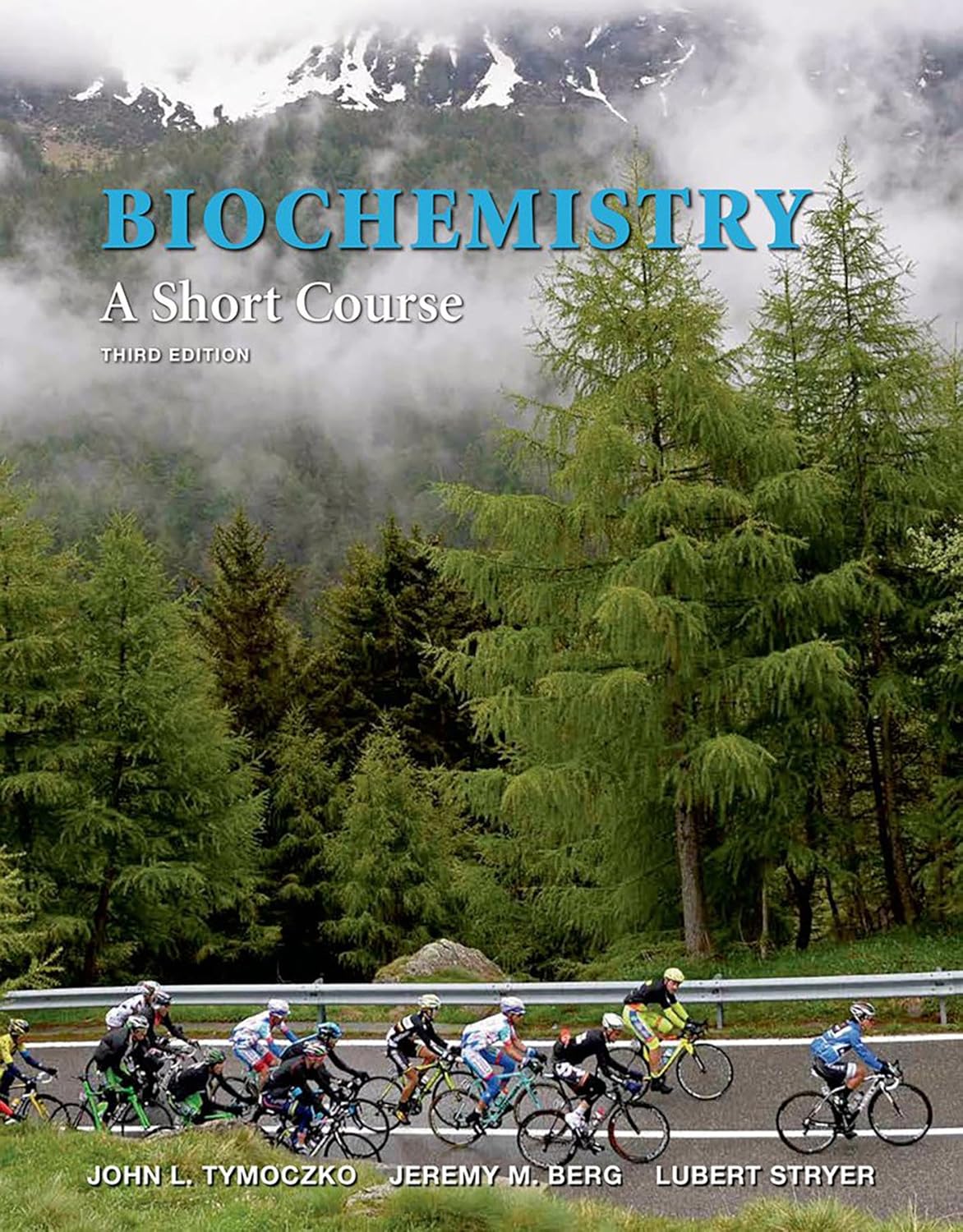
Biochemistry A Short Course 3rd Edition by Tymoczko Test Bank
Description
-
Biochemistry: A Short Course, 3rd Edition – Test Bank Overview
Authors: John L. Tymoczko, Jeremy M. Berg, Lubert Stryer
ISBN-10: 1464126135 | ISBN-13: 9781464126130Boost your biochemistry knowledge with this comprehensive test bank, covering molecular biology, metabolism, enzymes, protein synthesis, nucleic acids, and metabolic pathways. Ideal for students, educators, and exam preparation, it provides detailed questions and explanations for mastering key biochemistry concepts.
PART I: THE MOLECULAR DESIGN OF LIFE 🧪
Section 1: Biochemistry Fundamentals 🌊
-
Chapter 1: Biochemistry and the Unity of Life – Core principles connecting all living organisms.
-
Chapter 2: Water, Weak Bonds, and the Generation of Order Out of Chaos – Role of water, hydrogen bonds, and molecular interactions in life.
Section 2: Protein Composition and Structure 💪
-
Chapter 3: Amino Acids – Building blocks of proteins, chemical properties, and classifications.
-
Chapter 4: Protein Three-Dimensional Structure – Protein folding, motifs, and structural stability.
-
Chapter 5: Techniques in Protein Biochemistry – Laboratory methods to analyze protein function and structure.
Section 3: Enzyme Kinetics and Mechanisms ⚡
-
Chapter 6: Basic Concepts of Enzyme Action – Fundamentals of enzyme catalysis.
-
Chapter 7: Kinetics and Regulation – Enzyme rate laws and regulatory mechanisms.
-
Chapter 8: Mechanisms and Inhibitors – Understanding inhibition, activation, and catalytic pathways.
-
Chapter 9: Hemoglobin, An Allosteric Protein – Oxygen transport and allosteric regulation.
Section 4: Carbohydrates and Lipids 🍞🥑
-
Chapter 10: Carbohydrates – Structure, classification, and biological roles.
-
Chapter 11: Lipids – Fats, phospholipids, cholesterol, and membrane functions.
Section 5: Cell Membranes and Signal Transduction 🧬
-
Chapter 12: Membrane Structure and Function – Lipid bilayers, fluidity, and transport mechanisms.
-
Chapter 13: Signal-Transduction Pathways – Receptors, second messengers, and cellular communication.
PART II: TRANSDUCING AND STORING ENERGY ⚡
Section 6: Metabolism Basics 🔥
-
Chapter 14: Digestion: Turning a Meal into Cellular Biochemicals – Food conversion to energy molecules.
-
Chapter 15: Metabolism: Basic Concepts and Design – Principles of catabolic and anabolic pathways.
Section 7: Glycolysis and Gluconeogenesis 🍬
-
Chapter 16: Glycolysis – Step-by-step glucose breakdown and energy release.
-
Chapter 17: Gluconeogenesis – Glucose synthesis and energy regulation mechanisms.
Section 8: Citric Acid Cycle 🔄
-
Chapter 18: Preparation for the Cycle – Pyruvate oxidation and TCA entry.
-
Chapter 19: Harvesting Electrons from the Cycle – NADH and FADH2 generation for ATP production.
Section 9: Oxidative Phosphorylation ⚡
-
Chapter 20: The Electron-Transport Chain – Mechanisms of electron flow and ATP synthesis.
-
Chapter 21: The Proton-Motive Force – Chemiosmosis and ATP synthase function.
Section 10: Photosynthesis 🌞
-
Chapter 22: The Light Reactions – Capturing solar energy to generate ATP and NADPH.
-
Chapter 23: The Calvin Cycle – Carbon fixation and sugar production.
Section 11: Glycogen Metabolism & Pentose Phosphate Pathway 🍚
-
Chapter 24: Glycogen Degradation – Glycogenolysis pathways.
-
Chapter 25: Glycogen Synthesis – Glycogenesis mechanisms.
-
Chapter 26: The Pentose Phosphate Pathway – NADPH and ribose-5-phosphate production.
Section 12: Fatty Acid & Lipid Metabolism 🥓
-
Chapter 27: Fatty Acid Degradation – β-oxidation of fatty acids for energy.
-
Chapter 28: Fatty Acid Synthesis – Acetyl-CoA and malonyl-CoA pathways for lipid formation.
-
Chapter 29: Lipid Synthesis – Formation of storage lipids, phospholipids, and cholesterol.
Section 13: Nitrogen-Containing Molecules 🧬
-
Chapter 30: Amino Acid Degradation and the Urea Cycle – Nitrogen metabolism.
-
Chapter 31: Amino Acid Synthesis – Anabolic pathways for protein precursors.
-
Chapter 32: Nucleotide Metabolism – Purine and pyrimidine pathways.
PART III: SYNTHESIZING THE MOLECULES OF LIFE 🧬
Section 14: Nucleic Acids & DNA Replication
-
Chapter 33: DNA and RNA Structure – Informational macromolecules.
-
Chapter 34: DNA Replication – Replication machinery, fidelity, and checkpoints.
-
Chapter 35: DNA Repair and Recombination – Genome maintenance and recombination pathways.
Section 15: RNA Synthesis, Processing & Regulation ✍️
-
Chapter 36: RNA Synthesis and Regulation in Bacteria
-
Chapter 37: Gene Expression in Eukaryotes
-
Chapter 38: RNA Processing in Eukaryotes
Section 16: Protein Synthesis & Recombinant DNA Techniques 🧬💻
-
Chapter 39: The Genetic Code – Codons and translation rules.
-
Chapter 40: The Mechanism of Protein Synthesis – Ribosome function and elongation.
-
Chapter 41: Recombinant DNA Techniques – Genetic engineering and biotechnology tools.
-
- https://beststudentteam.blogspot.com/
- https://www.facebook.com/profile.php?id=61581138874625
- https://www.instagram.com/best_student_team/
- https://x.com/BestStudentTea1